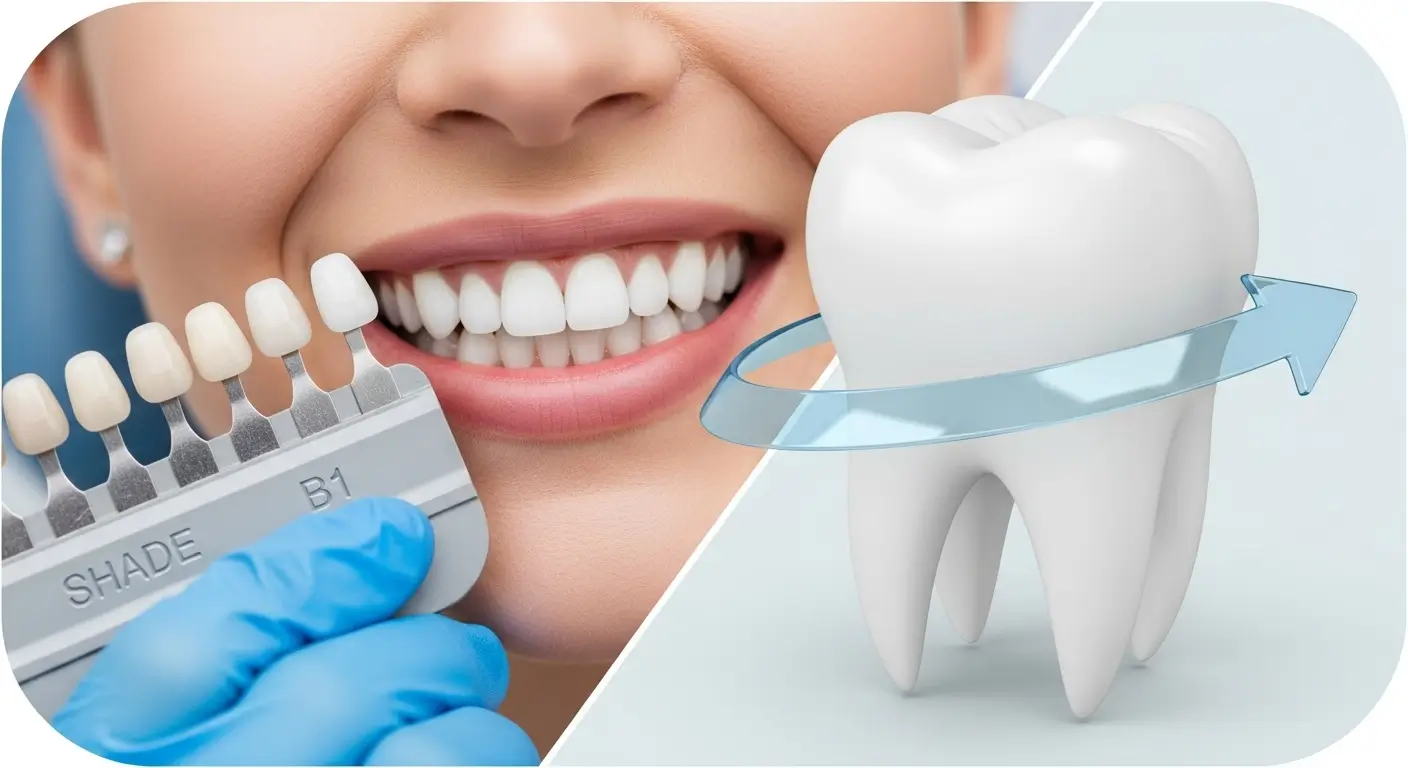
Tooth decay, injuries, infections, and everyday wear can damage teeth over time. Missing or damaged teeth may affect chewing, speaking, oral health, and confidence.
Restorative dentistry focuses on repairing damaged teeth and replacing teeth that cannot be preserved. Sparkle House Dental provides restorative dental care near Houston’s Museum District and Texas Medical Center.
Signs That You May Need Restorative Care
Some dental problems are visible, while others can only be identified through an examination and appropriate imaging.
Schedule an evaluation if you notice:
- Tooth pain or sensitivity
- Pain when biting or chewing
- A cracked, chipped, or broken tooth
- A loose or missing filling
- A loose or damaged crown
- Visible tooth decay
- Swelling near a tooth
- A missing tooth
- Food becoming trapped in a particular area
- Changes in an older dental restoration
Avoid waiting for a problem to become severe. Early evaluation may provide more treatment options and could help preserve more of the natural tooth.
Tooth-Colored Fillings
A filling may be appropriate when decay or minor damage affects a limited part of a tooth. The damaged area is removed and restored with dental material.
Tooth-colored fillings are designed to blend with the surrounding tooth while restoring its shape and function. The dentist will determine whether a filling is sufficient based on the size and location of the affected area.
Dental Crowns
A dental crown covers and protects the visible portion of a weakened or damaged tooth. A crown may be considered when a tooth has:
- A large filling
- Significant decay
- A fracture
- Extensive wear
- Undergone root canal treatment
- Insufficient structure for a filling alone
The purpose of a crown is to restore the tooth’s structure and function. Before recommending one, the dentist will evaluate whether enough healthy tooth structure remains to support the restoration.
Root Canal Treatment
The center of a tooth contains tissue known as the pulp. Deep decay, cracks, or injuries can cause this tissue to become inflamed or infected.
Root canal treatment removes the affected tissue, cleans the inside of the tooth, and seals the space. A crown or another restoration may then be needed to protect the tooth.
Symptoms that may require evaluation include persistent pain, prolonged sensitivity, swelling, or discomfort when chewing. These symptoms do not automatically mean that a root canal is needed. A clinical examination and appropriate imaging are necessary to identify the cause.
Dental Bridges for Missing Teeth
A dental bridge replaces one or more missing teeth using neighboring teeth or other support to hold the restoration in place.
A bridge may help restore chewing ability and the appearance of the smile. The dentist will evaluate the neighboring teeth, gums, bite, and location of the missing tooth before recommending this option.
Dental Implants
Dental implants are another option for replacing missing teeth. An implant is placed into the jawbone and used to support a replacement tooth or a more extensive restoration.
Depending on the patient’s situation, potential benefits may include:
- Stable support for a replacement tooth
- Improved chewing ability
- A natural-looking appearance
- Support for surrounding oral structures
- Long-term function with appropriate care
Implant treatment typically occurs in stages. Before recommending an implant, the dentist evaluates the patient’s teeth, gums, jawbone, medical history, and the location of the missing tooth.
Not every patient is an immediate candidate. Some may need additional preparation, while others may be better served by a bridge or removable replacement option.
How Dental Technology Supports Treatment Planning
Sparkle House Dental uses modern technology to help evaluate dental conditions and explain findings to patients.
Depending on the situation, this may include:
- A comprehensive visual examination
- Digital dental X-rays
- Panoramic imaging
- Three-dimensional CBCT imaging
CBCT imaging provides a three-dimensional view of the teeth, roots, jawbone, and surrounding structures. It may be used when clinically appropriate for dental implant planning or other detailed evaluations.
Not every patient needs every type of imaging. The dentist will select the appropriate technology based on the patient’s condition and proposed treatment.
How Is the Right Treatment Chosen?
A damaged or missing tooth may have more than one possible treatment. The dentist considers:
- How much healthy tooth structure remains
- The condition of the tooth’s root
- Gum and bone health
- The tooth’s location
- The patient’s bite
- Medical and dental history
- Previous dental work
- Long-term treatment goals
- Available alternatives
For example, a small damaged area may be repaired with a filling, while a more extensively weakened tooth may require a crown. A missing tooth might be replaced with an implant, bridge, or removable option.
The purpose of the examination is to determine which choices are clinically appropriate and explain the advantages and limitations of each.
Understanding Treatment and Estimated Costs
After the examination, the dentist will explain the findings and recommended treatment. Patients are encouraged to ask questions about the procedure, possible alternatives, timeline, aftercare, and expected outcome.
For patients with dental insurance, our team verifies available benefits and uses the information supplied by the insurance company to prepare an estimate of coverage and expected patient responsibility.
Insurance verification does not guarantee payment because the insurer makes its final determination after reviewing the claim. Our team will provide the clearest available estimate before treatment begins.
Frequently Asked Questions
1. Can every damaged tooth be saved?
A. No. Whether a tooth can be restored depends on the extent of the damage, condition of the root, remaining tooth structure, and health of the surrounding tissues. An examination is necessary to determine the available options.
2. Is a crown the same as a filling?
A. No. A filling repairs a limited damaged area, while a crown covers most or all of the visible portion of a weakened tooth. The dentist will recommend an option based on the tooth’s condition.
3. Are dental implants suitable for everyone?
A. No. Dental implant candidacy depends on gum health, available bone, medical history, oral health, and other factors. A professional evaluation is required.
4. What should I do if I have severe tooth pain?
A. Contact a dental office promptly. Severe pain may be caused by decay, inflammation, infection, injury, or another condition requiring evaluation.
Seek emergency medical attention if you experience difficulty breathing or swallowing, uncontrolled bleeding, severe facial trauma, or another potentially life-threatening condition.
Schedule a Restorative Dental Evaluation
If you have tooth pain, a damaged restoration, a broken tooth, or a missing tooth, schedule an evaluation at Sparkle House Dental.
Our team will examine the area, explain the findings, and discuss appropriate treatment options based on your individual needs.
Call 713-529-3069 or use our online scheduling feature to request an appointment.
Sparkle House Dental
1213 Hermann Drive, Suite 275
Houston, TX 77004